Issue No. 1
AUGUST 2026
Stories of work, place, memory and the small things worth noticing.
THE MEN WHO KNEW HOW TO FIX THINGS
Richard DiVirgilio spent a lifetime learning what machines could teach him, and what one generation of skilled hands could pass to the next.
This story began somewhere during a twelve-hour drive from New York to North Carolina.
My husband Rich and I spend a lot of hours together in the car, and if an old car passes us, I have learned not to casually ask what year it is unless I'm prepared for the answer.
He'll tell me the year. Then he'll tell me what engine was available, when the body style changed, what changed underneath it and, quite often, why. I get schooled on most road trips.
I've asked him more than once how he keeps so much of this information in his head. It's almost like a museum of automotive history stored in his memory. Cars aren't simply old or new to Rich. They belong to a particular year, an engine, a body style, an engineering decision, a time when something changed.
Some of his favorite outings when we're in New York have been the Syracuse Nationals and the Northeast Classic Car Museum in Norwich, which we've visited several times. For me, it's a museum. Walking through it with Rich is something different. There is usually a story attached to whatever we're looking at.
On this particular drive south, I started asking more questions. I made notes while he talked and read them back to him. He corrected me numerous times. One question led to another, and for nearly seven hours of our twelve-hour trip, we talked.
The red No. 7. The No. 4. They were modified coupes. Joe Dolan wasn't simply a business owner. He was also an instructor at BOCES. The little race kart Rich built for our son was a Microd race kart.
Details matter to Rich. By the time I finally put down my notes, we had a story.
Or at least I thought we did.
Long before Rich knew what he would do for a living, there were race cars.
Modified racing at Orange County Fair Speedway, where Rich's fascination with machines began.
Because somewhere during that drive, I realized I wasn't only listening to the history of my husband's life. I was listening to the history of a way people once learned.
And that eventually brought us to airplanes.
In February 1981, Rich began studying airframe and powerplant mechanics at the Teterboro School of Aeronautics in Moonachie, New Jersey. He wanted a career in aviation badly enough to send out close to one hundred resumes. He interviewed with People Express and found work for a short time at Orange County Flight Academy.
Today, the aviation industry is struggling to find people who know how to do what Rich trained to do more than 40 years ago.
That contradiction stopped me.
We hear constantly about America's shortage of skilled workers. We need aircraft mechanics, welders, machinists, automotive technicians and fabricators. Employers are raising wages and, in some cases, offering substantial signing bonuses to attract people with skills that suddenly seem scarce.
So where did all the people who knew how to fix things go?
After seven hours of listening to Rich, I began to think that might be the wrong question.
Maybe we should be asking where they used to come from.
For Rich, it started around eleven years old with a go-kart.
He grew up in Middletown, New York. He and his friends knew the Orange County Fairgrounds had paved roads winding through the property, and they wanted somewhere to ride their go-karts. So they went to Al Howard, the fair director and promoter of Orange County Fair Speedway, and asked if they could use the roads when the fairgrounds weren't being used.
Mr. Howard said yes. Their parents just had to sign permission slips.
Think about that for a moment.
A group of eleven-year-old boys approached the man running the fairgrounds with their go-karts, and instead of simply telling them no, he found a way to say yes.
Nobody called it STEM. Nobody talked about workforce development or career readiness. They were kids making noise, tinkering, breaking things, fixing them and trying again.
But they were also discovering what interested them.
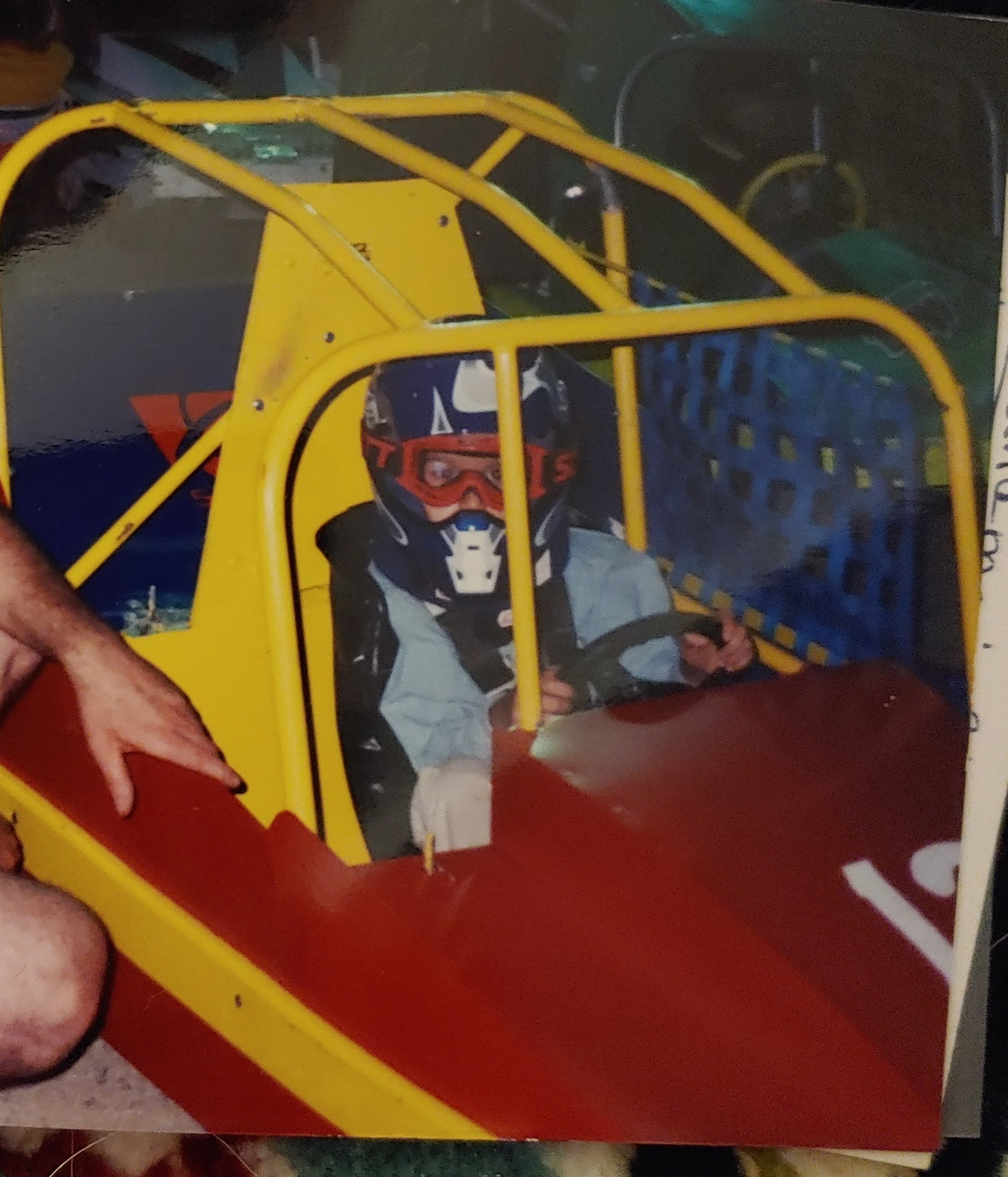
Richie DiVirgilio in the Microd race kart his father built for him.
What mattered was what happened next.
A couple of years later, another adult said yes.
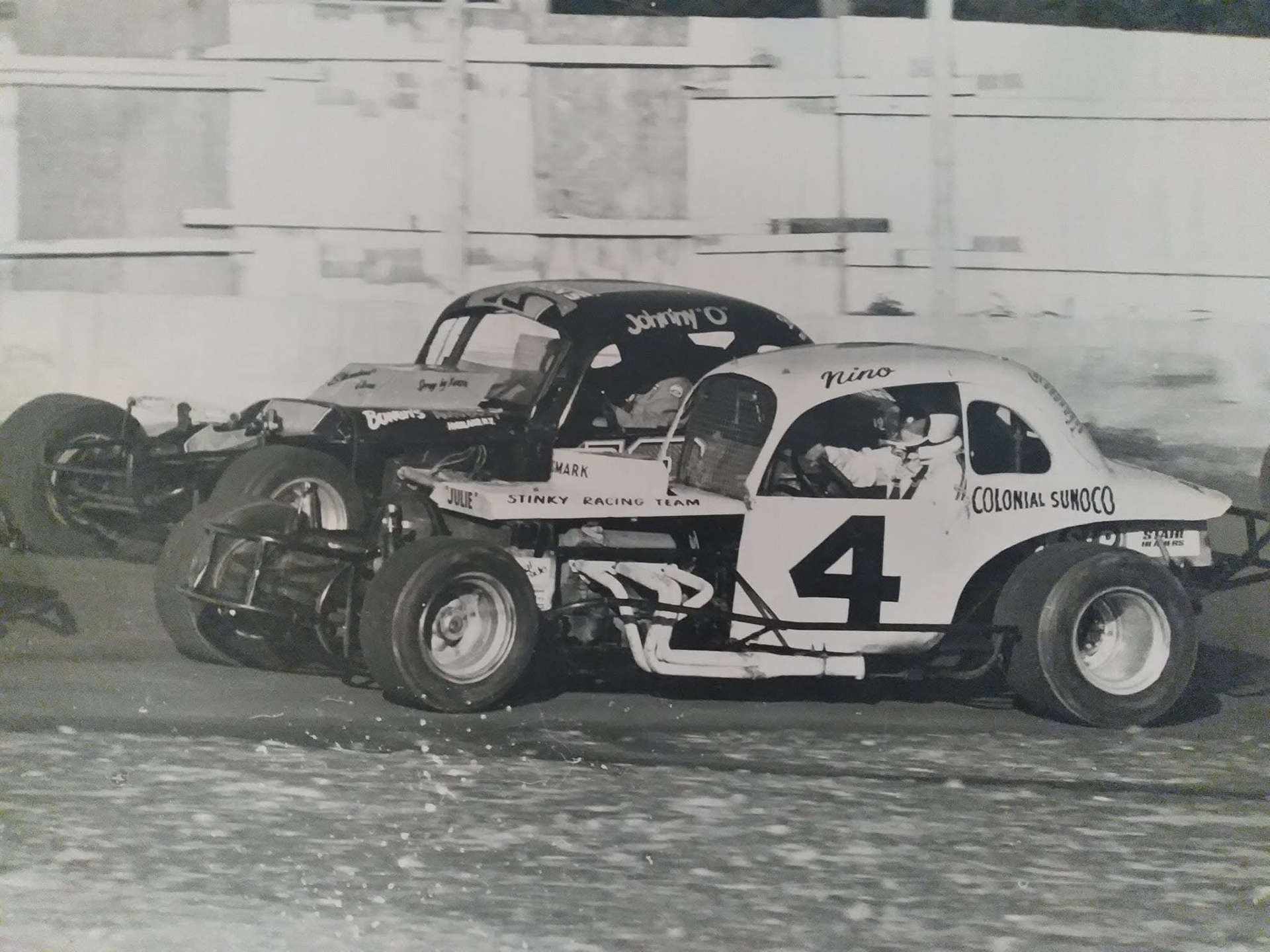
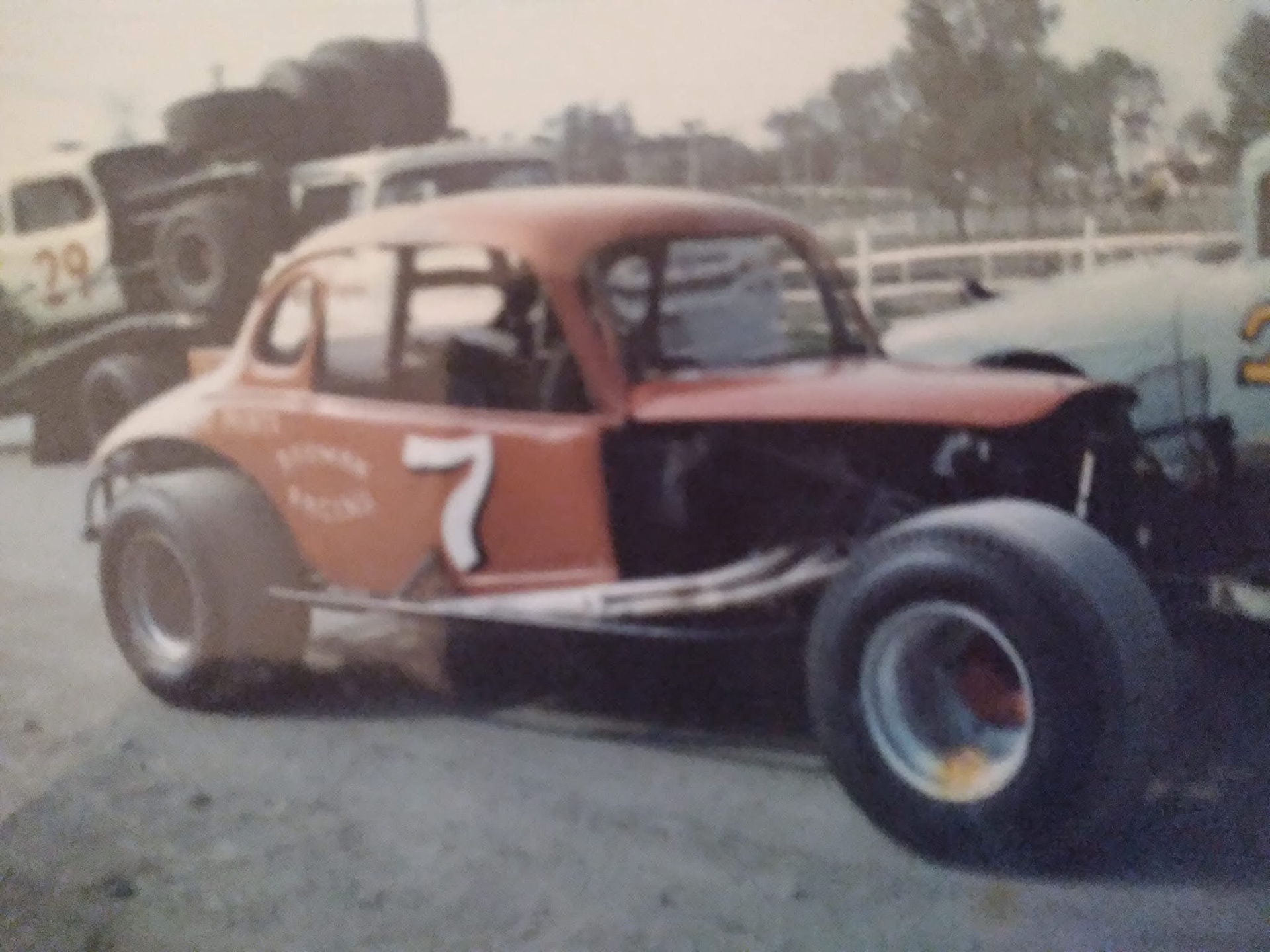
Anthony "Nino" Marcello raced small-block modifieds at Orange County Fair Speedway, including a red No. 7 and later a No. 4. These were the coupe-bodied modifieds familiar to local tracks through much of that era, when many race cars still came out of garages and small shops and were built by the people who raced them.
Nino let thirteen-year-old Rich and his son Sal help maintain his race car.
That was how a lot of knowledge traveled then. You stood beside someone who knew more than you did.
You watched. You listened. Eventually they handed you a tool and let you try.
You watched. You listened. Eventually they handed you a tool and let you try.
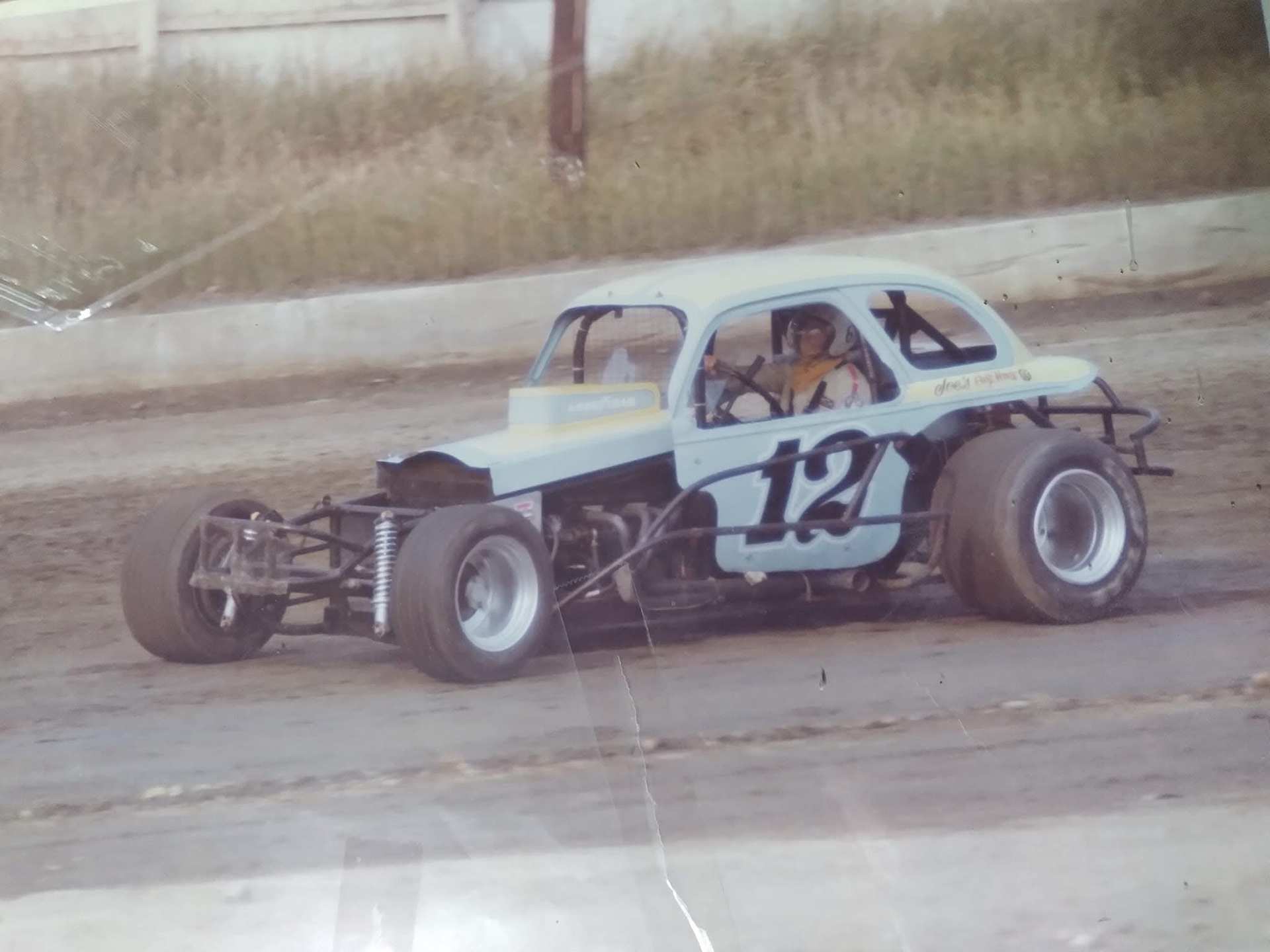
The old photographs Rich gave me from those years tell part of the story better than I can. There is Nino's No. 7 and later his No. 4. And there is the blue-and-yellow No. 12, the car Rich and his childhood friend Jerry Zazzero built, with Nino behind the wheel.
From the family archive...
No. 7 Anthony "Nino" Marcello's modified coupe. Courtesy of Richard DiVirgilio.
No. 4 Anthony "Nino" Marcello racing the No. 4 modified coupe. Courtesy of Richard DiVirgilio.
No. 12 Richard DiVirgilio and Jerry Zazzero's small-block modified, built largely by hand, with Anthony
"Nino" Marcello behind the wheel. Family archive.
These weren't pristine machines preserved for a museum. They were built to race. They came out of garages and small shops, from people who welded, fabricated, repaired and figured things out as they went.
For a thirteen-year-old standing nearby and being allowed to help, the garage itself became a classroom.
Rich's education continued in high school through BOCES, where he studied welding. One of the people who influenced him most was Joe Dolan, a BOCES instructor who was also a business owner and owned the Gulf station in Middletown where Rich worked.
Joe became Rich's greatest mentor in automotive repair.
The more I think about Joe's role, the more important it seems. His classroom knowledge and working knowledge weren't separate things. He knew what happened when the lesson met the broken car sitting in front of you, a customer waiting for it and a problem that had to be solved.
Rich had access to both worlds.
More than fifty years later, he still keeps in touch with Joe and Nino when he returns to Middletown. I think he appreciates those relationships even more today because he understands what those men actually gave him.
They took a young person's curiosity seriously.
By twenty-one, the kid who had once been allowed to help with Nino's race car had built one of his own.
Rich and his childhood friend Jerry Zazzero were partners on a blue-and-yellow No. 12 small-block modified coupe. The chassis was homemade, and many of its components were fabricated by hand. And Nino drove it.
I love that part of this story.
The man who had once let a thirteen-year-old boy help with his race car eventually climbed behind the wheel of a car that boy had grown up to build.
But racing was changing too. Through the 1970s, the familiar coupe and coach bodies of local modified racing were increasingly giving way to more specialized cars and professionally fabricated racing chassis.
More of what racers once made themselves could now be purchased from companies devoted specifically to racing.

Rich was changing direction too.
He sold the No. 12 because he had decided to learn how to work on airplanes.
In February 1981, he started at the Teterboro School of Aeronautics.
His timing could hardly have been more complicated.
The Airline Deregulation Act had been signed in 1978, beginning a major restructuring of commercial aviation. Federal control over airline fares, routes and market entry was being removed. New carriers appeared and established airlines faced a very different competitive environment. Then the severe recession of 1981 and 1982 arrived, bringing heavy losses and layoffs throughout the industry.
Rich still wanted in.
He sent close to one hundred resumes looking for aviation work. He interviewed with People Express, one of the new airlines operating from Newark that became closely associated with the deregulated era. He did find work for a short time at Orange County Flight Academy.
He wasn't someone who learned a trade and decided he didn't like it. He tried to make a life in it, but the salary he found simply wasn't enough for him to see a future there.
So aviation lost a mechanic.
The United States Postal Service got him instead.
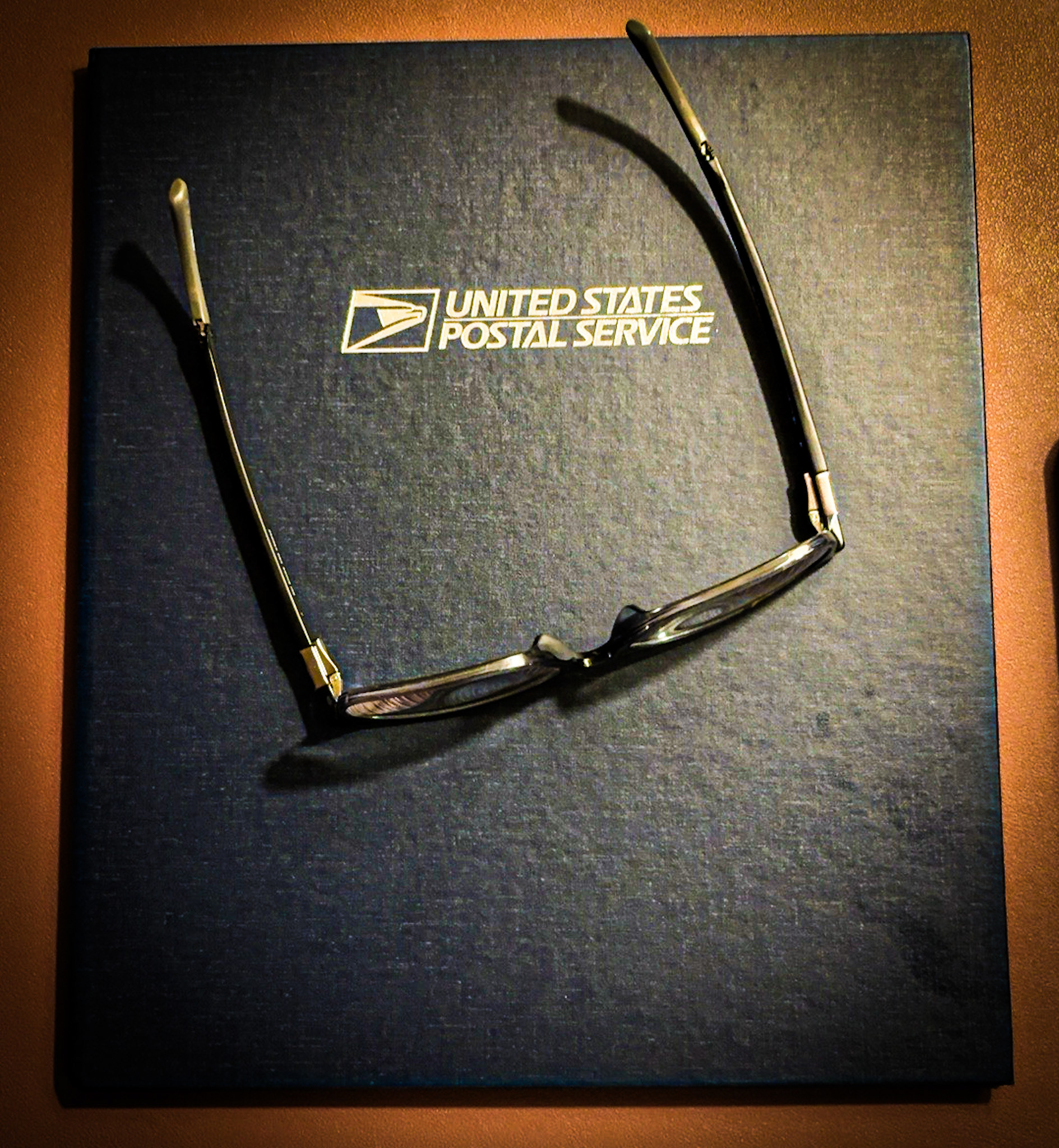
Rich went to work at a USPS Vehicle Maintenance Facility, eventually becoming a Lead Auto-Tech. He stayed for 40 years and six months. When he retired, he had accumulated approximately 2,100 hours of unused sick leave.
There are a lot of ways to measure loyalty to a career. I think that number says quite a bit.
Rich's story is personal, but the world that produced his skills was part of something much larger happening across America.
For much of the twentieth century, vocational education occupied a substantial place in American public education. Students could learn automotive repair, machine shop, woodworking, drafting, welding and other practical skills. In New York, BOCES gave students access to specialized career and technical education that individual schools couldn't always provide.
It wasn't a perfect system. Vocational programs could sometimes steer students into tracks based on assumptions about their abilities or backgrounds, and expanding access to higher education opened important doors for millions of Americans.
But somewhere along the way, the pendulum swung very far in the other direction.
Beginning particularly in the 1980s and continuing over the following decades, academic graduation requirements grew and preparation for a four-year college increasingly became the standard by which educational success was measured. Traditional vocational coursework declined. Shop programs needed expensive equipment, space and instructors with specialized knowledge, and they competed for time in increasingly academic high-school schedules.
Gradually, many families heard the same message:
If you were smart and ambitious, you went to college.
Working with your hands too often became the other choice.
I wonder now what that cost us.
The loss wasn't dramatic. There wasn't a morning when America woke up and decided it no longer needed people who knew how to build and repair things. A shop class disappeared here. An experienced instructor retired there. A welding booth was removed. A neighborhood garage closed. A teenager who might once have spent an afternoon beside an experienced mechanic never got close enough to discover that machines made sense to him.
The knowledge didn't disappear.
The people carrying it simply got older.
Then, decades later, we looked around and discovered we didn't have enough of them.
Now we're trying to bring some of it back.
Career and technical education is receiving renewed attention. High schools and community colleges are investing again in welding, automotive technology, advanced manufacturing and other skilled fields.
Aviation employers are searching for aircraft maintenance technicians and paying premiums for experience.
In some ways, America is rebuilding a pipeline we spent decades allowing to narrow.
But equipment and classrooms aren't the whole story.
There were also the mentors.
Rich never forgot the people who let him stand beside them. Somewhere along the way, without announcing that he was doing it, he became one of those people himself.
When our son Richie was seven, Rich built him a Microd race kart, which he raced at Tri-County Speedway in Triangle, New York. Years after Nino had given Rich a place beside a race car, Rich gave his own son the chance to discover something for himself.
Our daughter Lisa's experience was different. For science class, she and her father built a miniature washing machine and a telegraph.
Then another generation came along.
Rich built our granddaughter Liza her own little No. 12 push-kart. He used leftover racing decals saved from his own racing days and from her father Richie's Microd racing days.
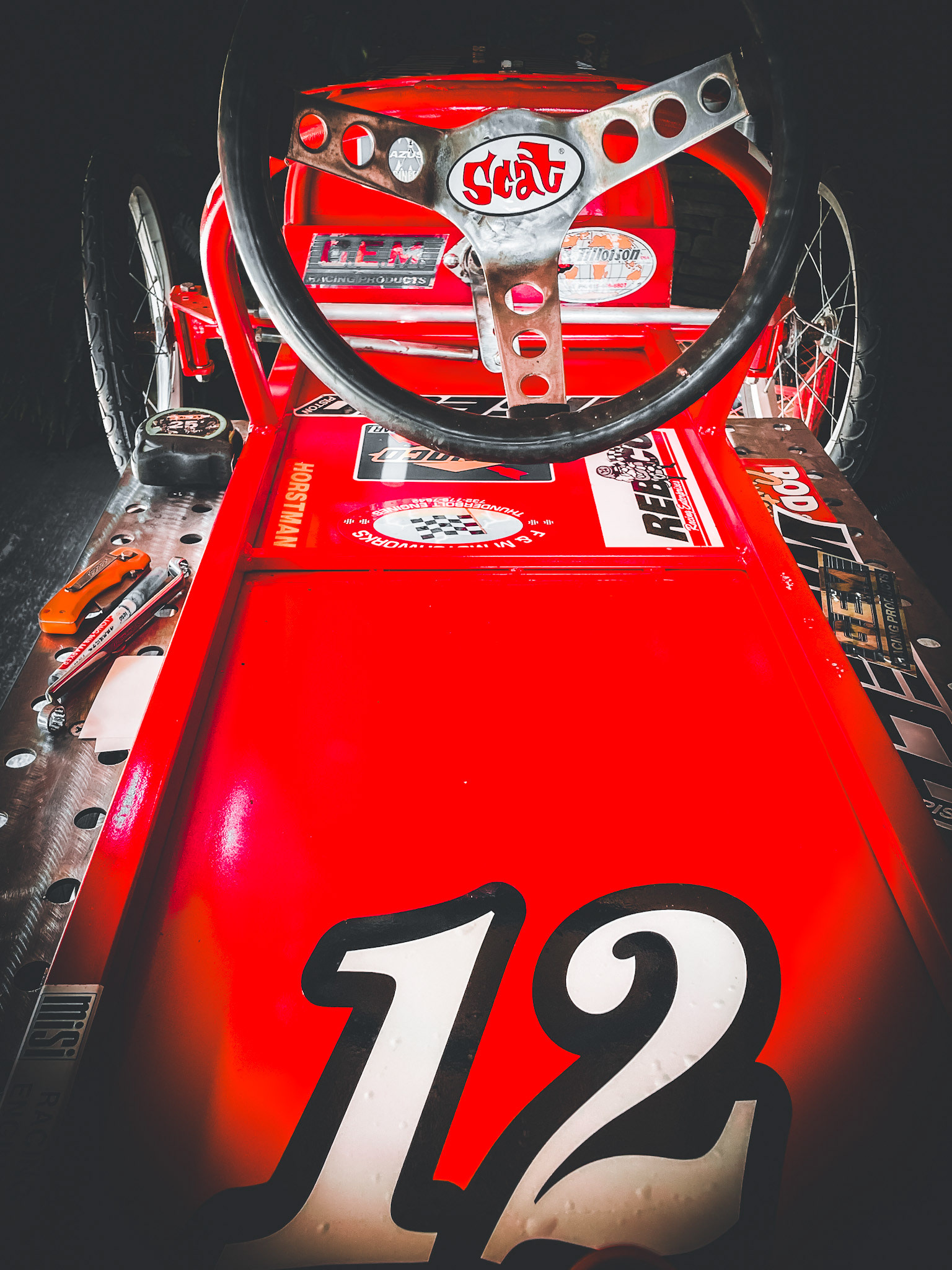
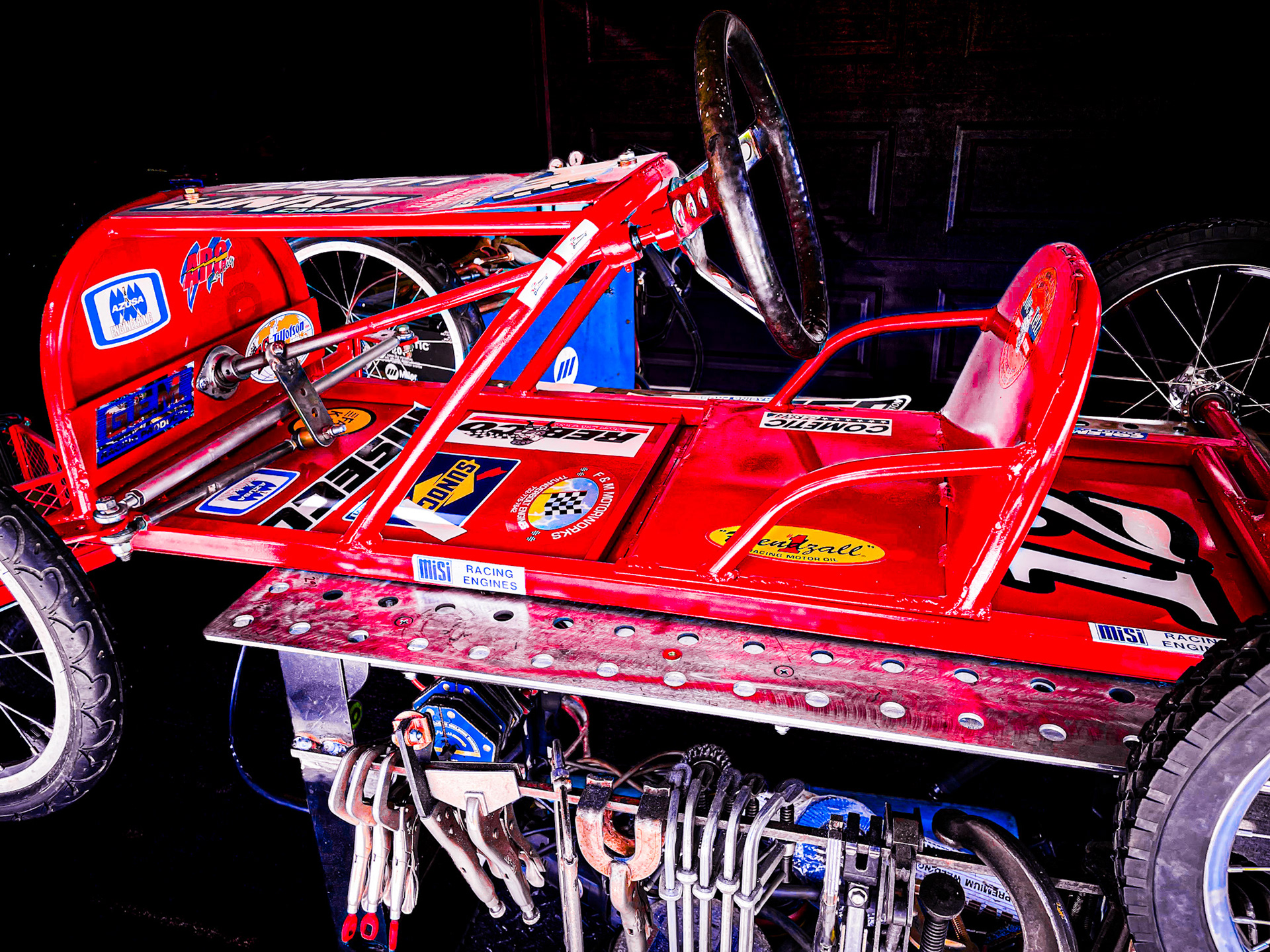
I love the history contained in that little red kart. A number carried forward. Old racing decals saved instead of thrown away. A grandfather making something for his granddaughter with pieces of a story that began decades before she was born.
Our granddaughters Hazel and Matilda got something different. When they were about six and eight, Grandpa built them a telegraph they could place between their bedrooms so they could send messages back and forth.
Two little girls tapping messages to each other on something their grandfather knew how to make.
None of these children was being prepared for a career. That wasn't the point. They were being shown that things don't always have to arrive finished in a box. You can wonder how something works. You can take something apart. You can make something yourself.
And maybe that is the part we've underestimated.
While Rich and I were talking on that drive, he said something I immediately wrote down:
"Interest often begins long before someone chooses a career."
He's right!
We tend to begin talking about skilled trades when someone is eighteen or twenty and deciding what to do with a life. We advertise training programs. Employers raise salaries. We offer signing bonuses.
Perhaps we're beginning the conversation ten years too late.
Before there is an aircraft mechanic, there may need to be an eleven-year-old with a go-kart. Before there is a welder, somebody may need to put the equipment into a teenager's hands. Before there is a master automotive technician, there may need to be a Joe Dolan willing to take a young person seriously. Before someone can build a race car, there may need to be a Nino Marcello willing to say, "You can help."
A signing bonus can recruit a mechanic. It cannot create one.
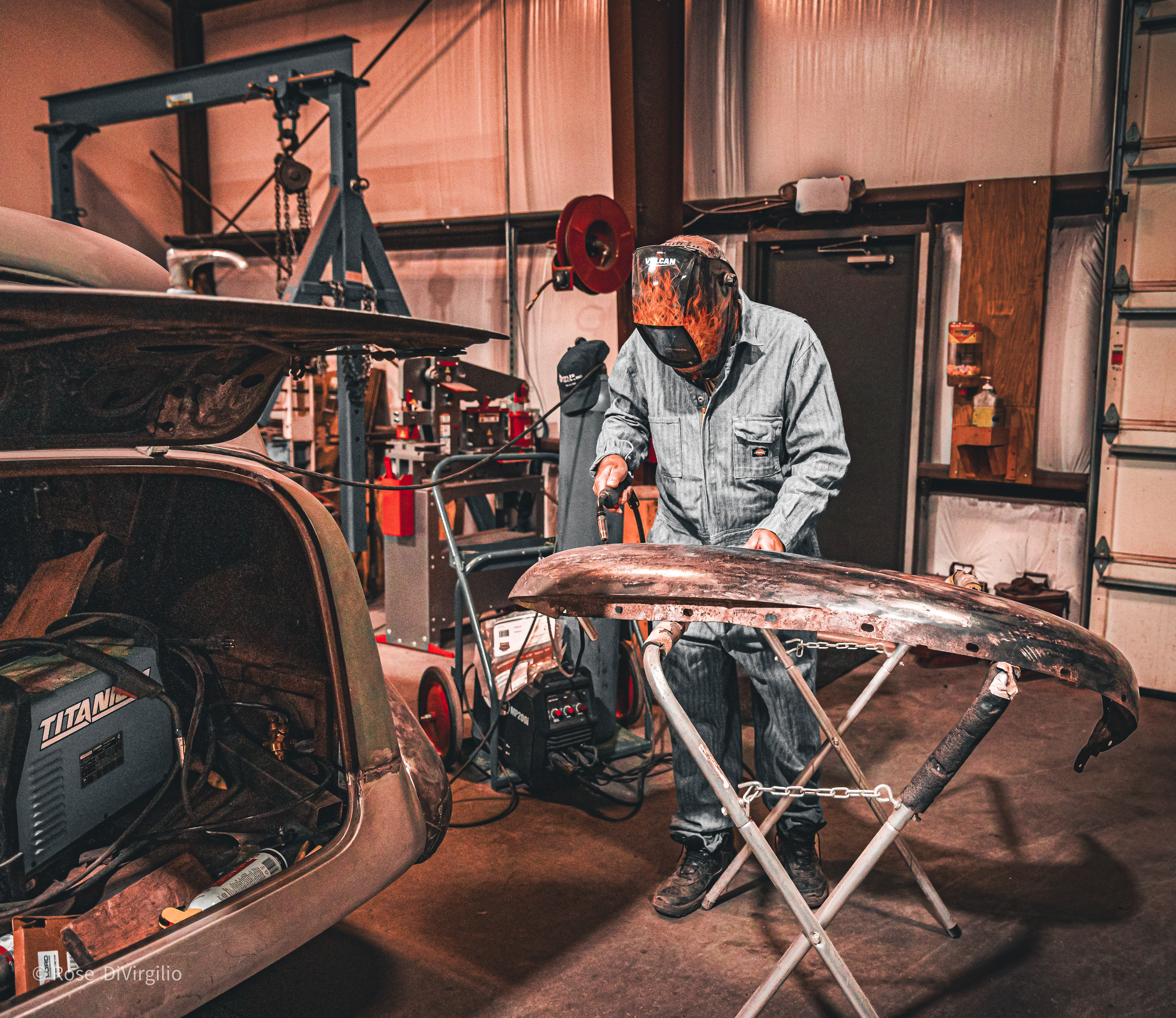
Rich is 69 now and retired, but curiosity apparently didn't retire with him. He takes auto-restoration and metal-forming classes at Cape Fear Community College, continuing to learn and work with skills whose foundations were laid nearly sixty years ago.
So I decided to attend one of his classes with my camera. I wasn't there simply to photograph a retired man enjoying a hobby class. I wanted to capture something I think we're beginning to recognize as valuable again.
Knowledge in motion.
The hands. The tools. The concentration. People learning beside one another. The ordinary shop moments that don't seem particularly historic while they're happening.
Those are the photographs I wanted for this story.
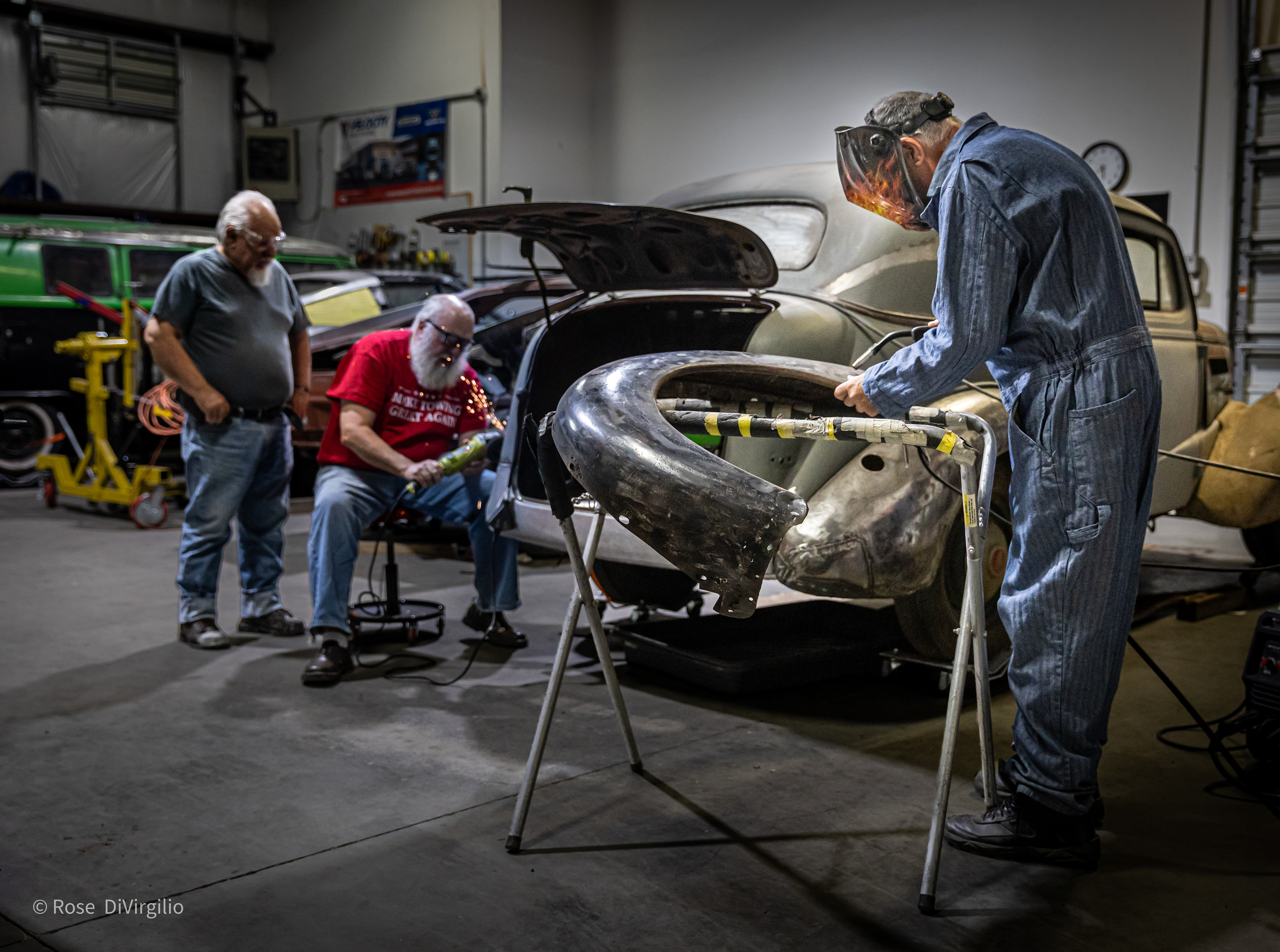
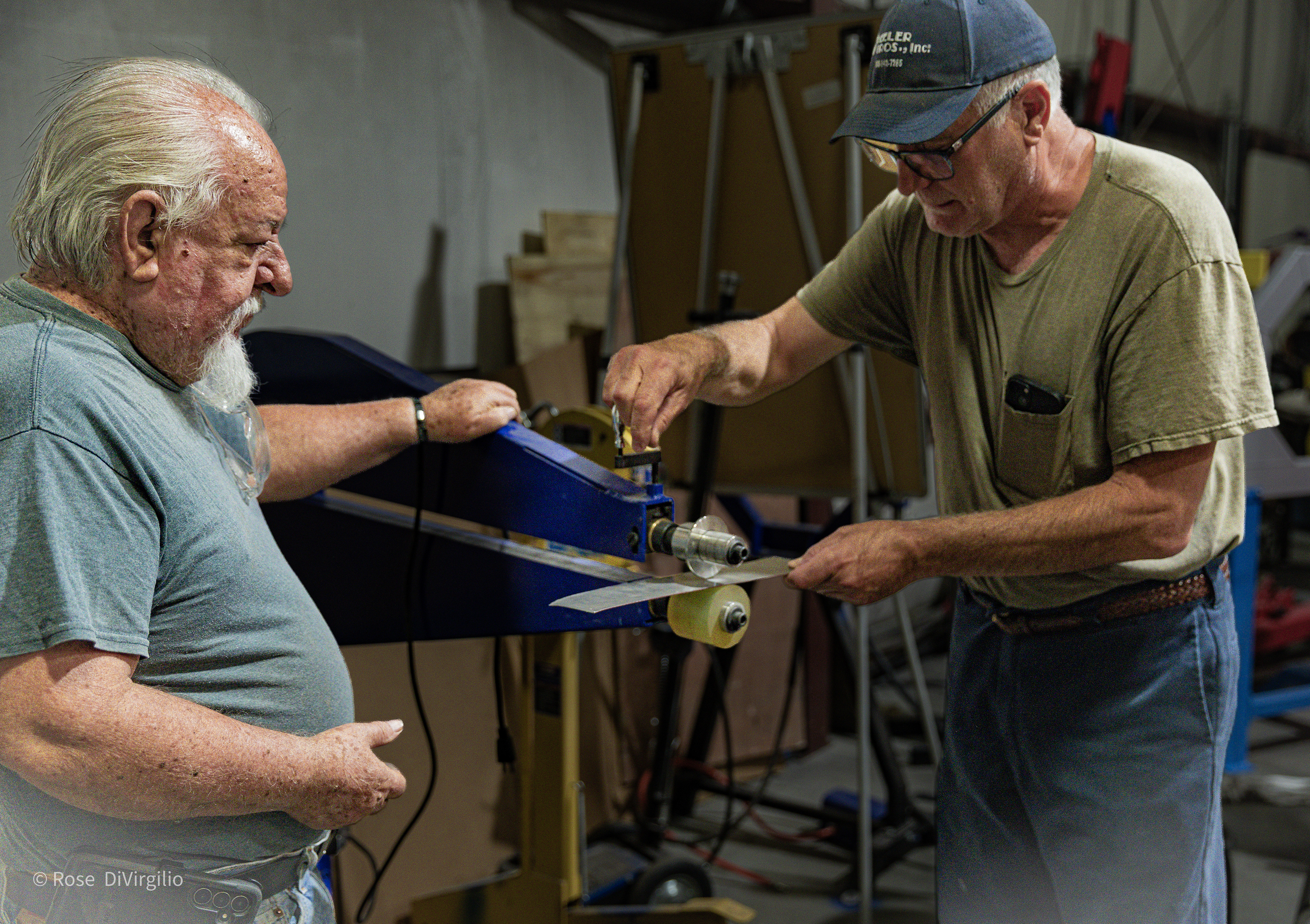
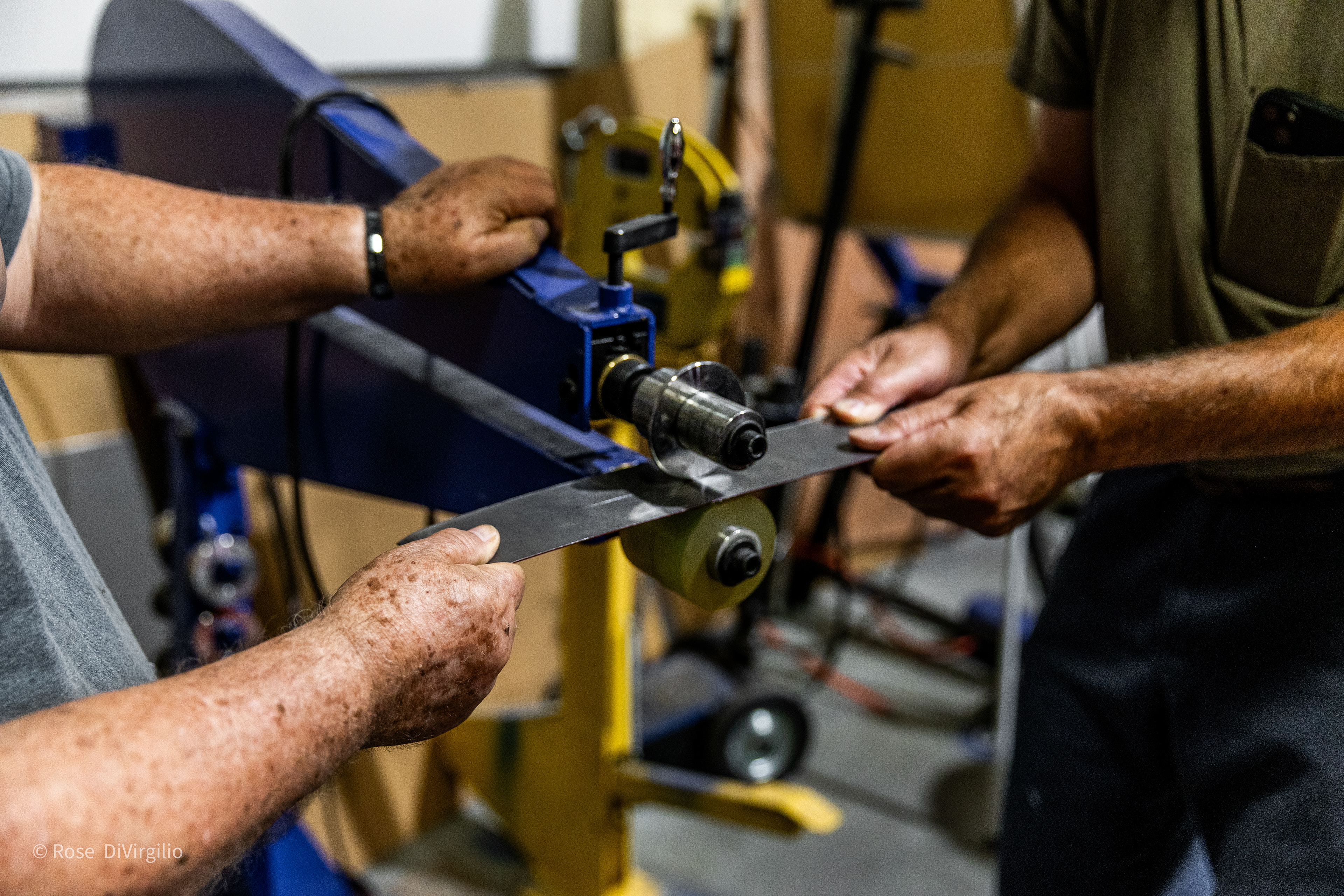
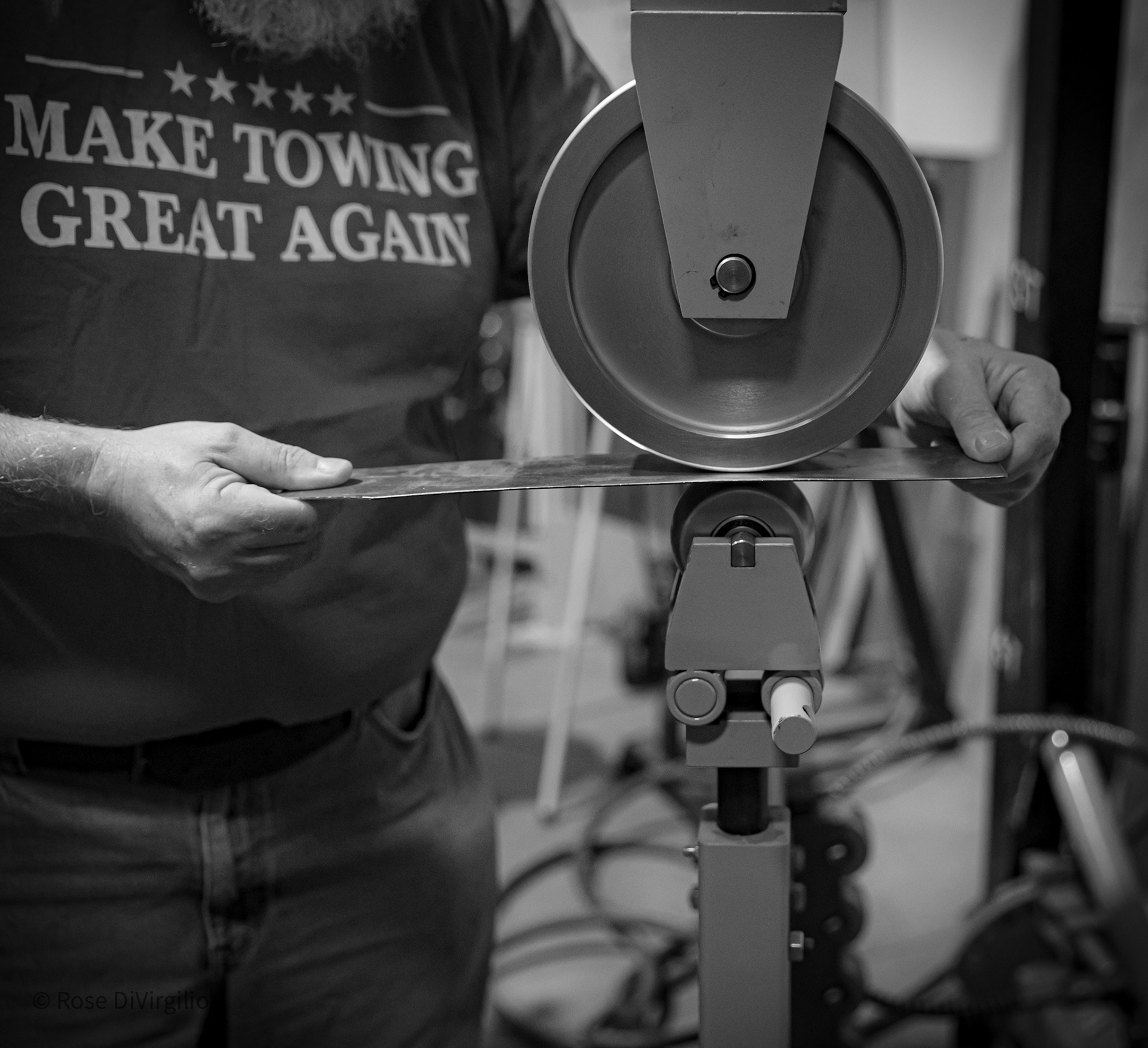
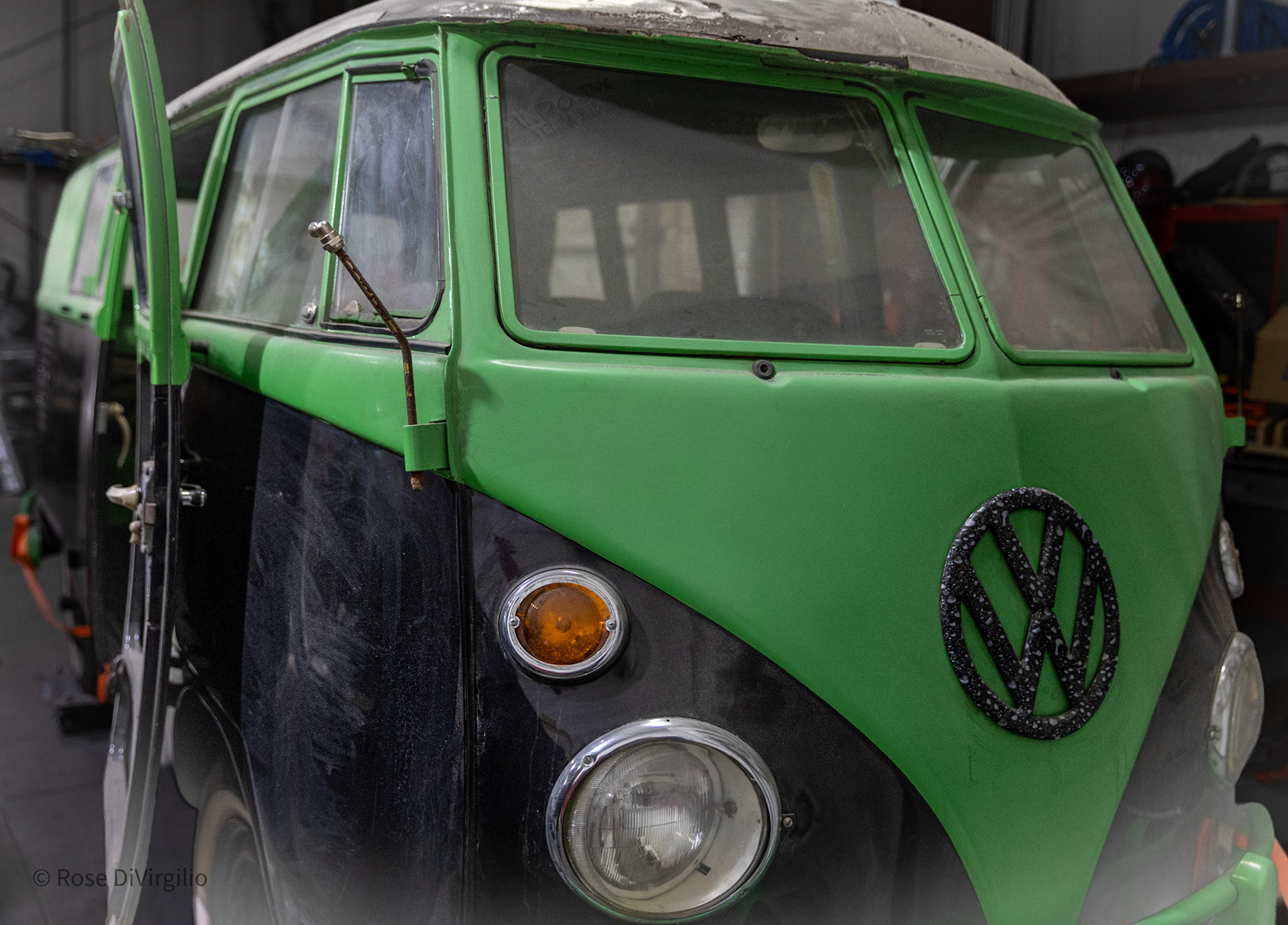
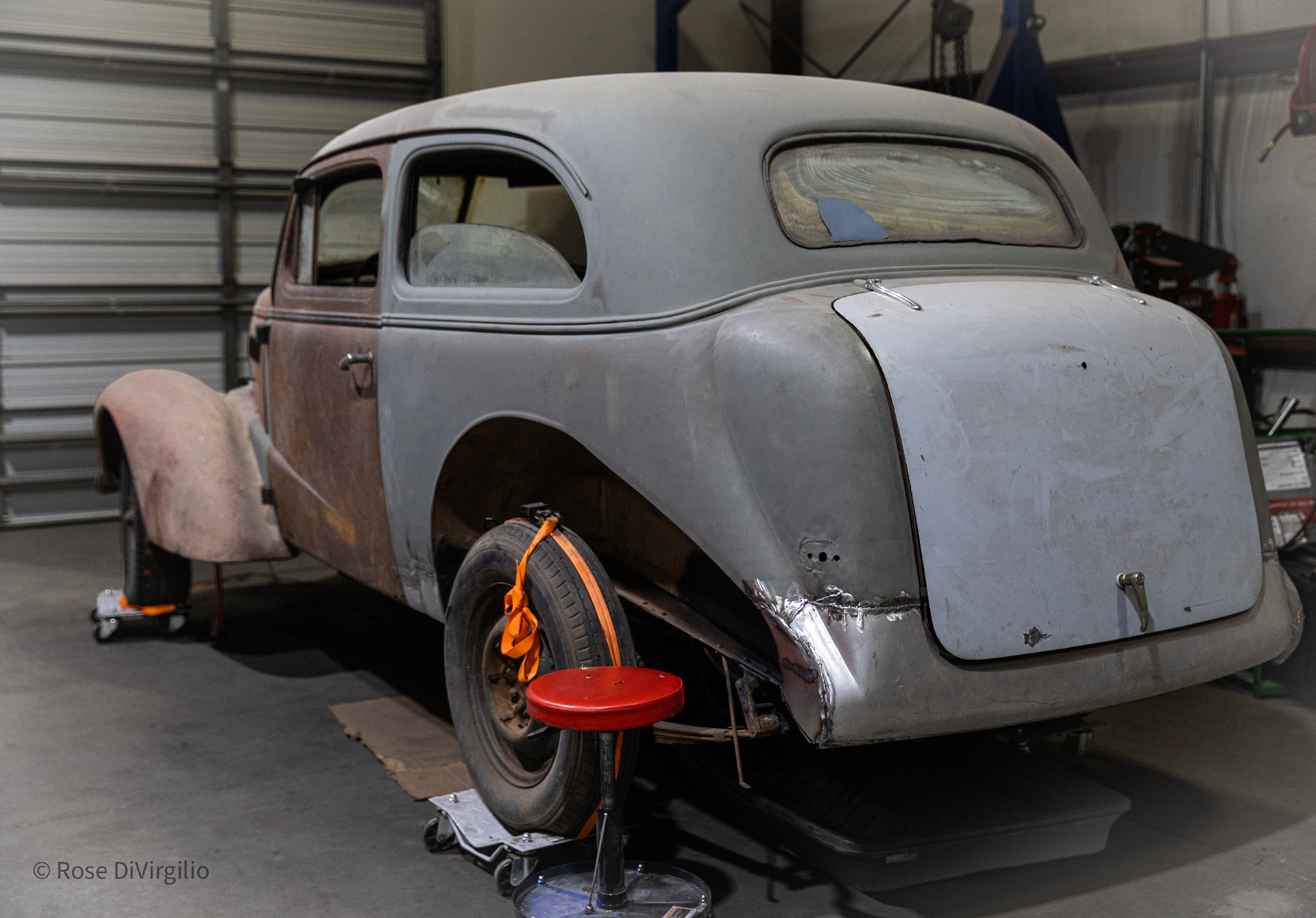
We photograph people at milestones all the time. Graduations, weddings, birthdays and retirements. We don't often think to photograph someone simply knowing how to do something.
Yet perhaps that's exactly what deserves preserving.
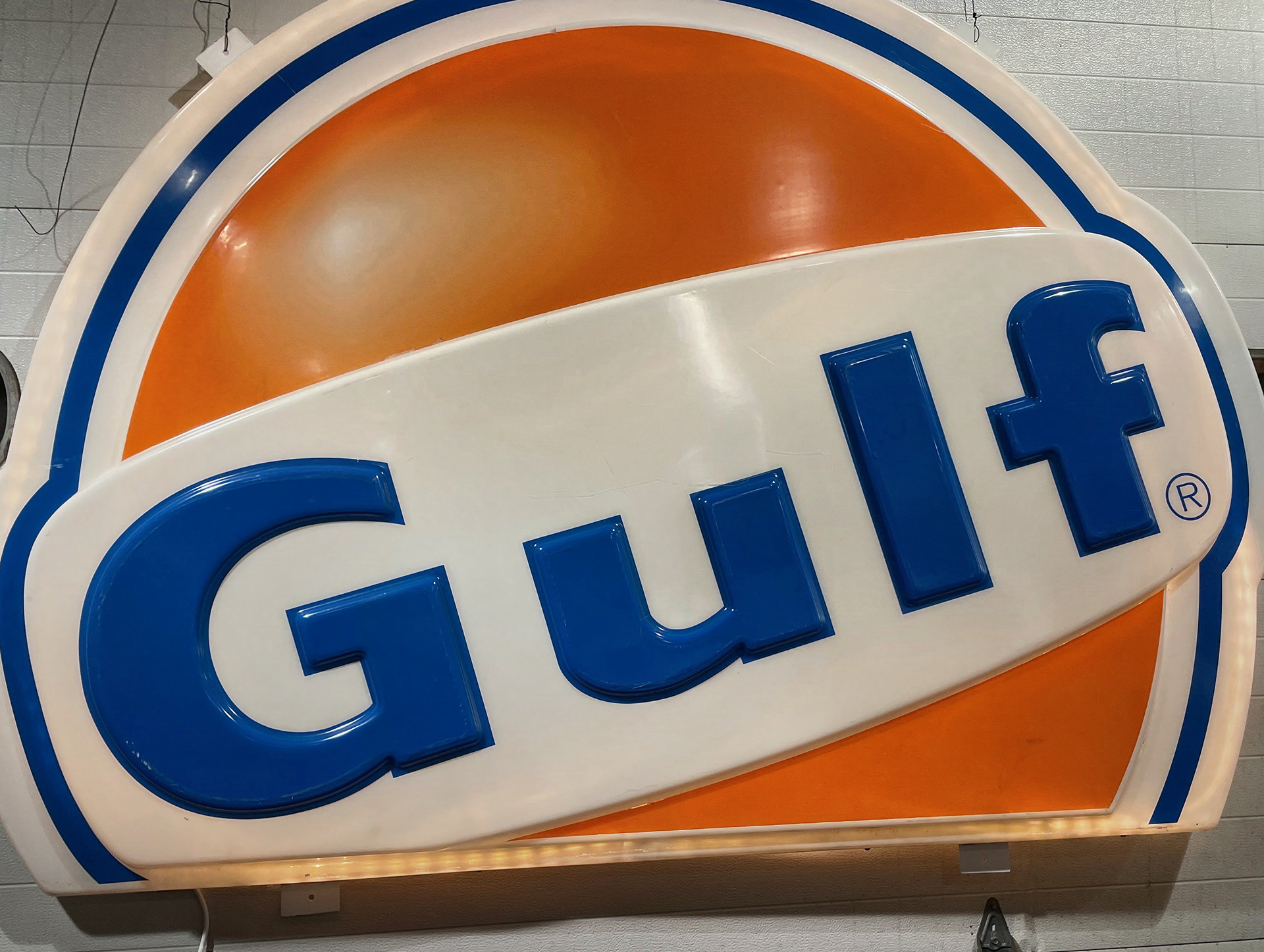
One photograph from Rich's working years was taken on his last day at the Postal Service. It was a retirement gift from his coworkers... a Gulf sign!
That sign will eventually hang in the garage we're building at home.
I can't help but appreciate the circle in that.
A Gulf station was part of where a teenage Rich learned his trade. More than half a century later, after 40 years and six months of work, a Gulf sign followed him home into retirement.
And he still isn't finished making things.
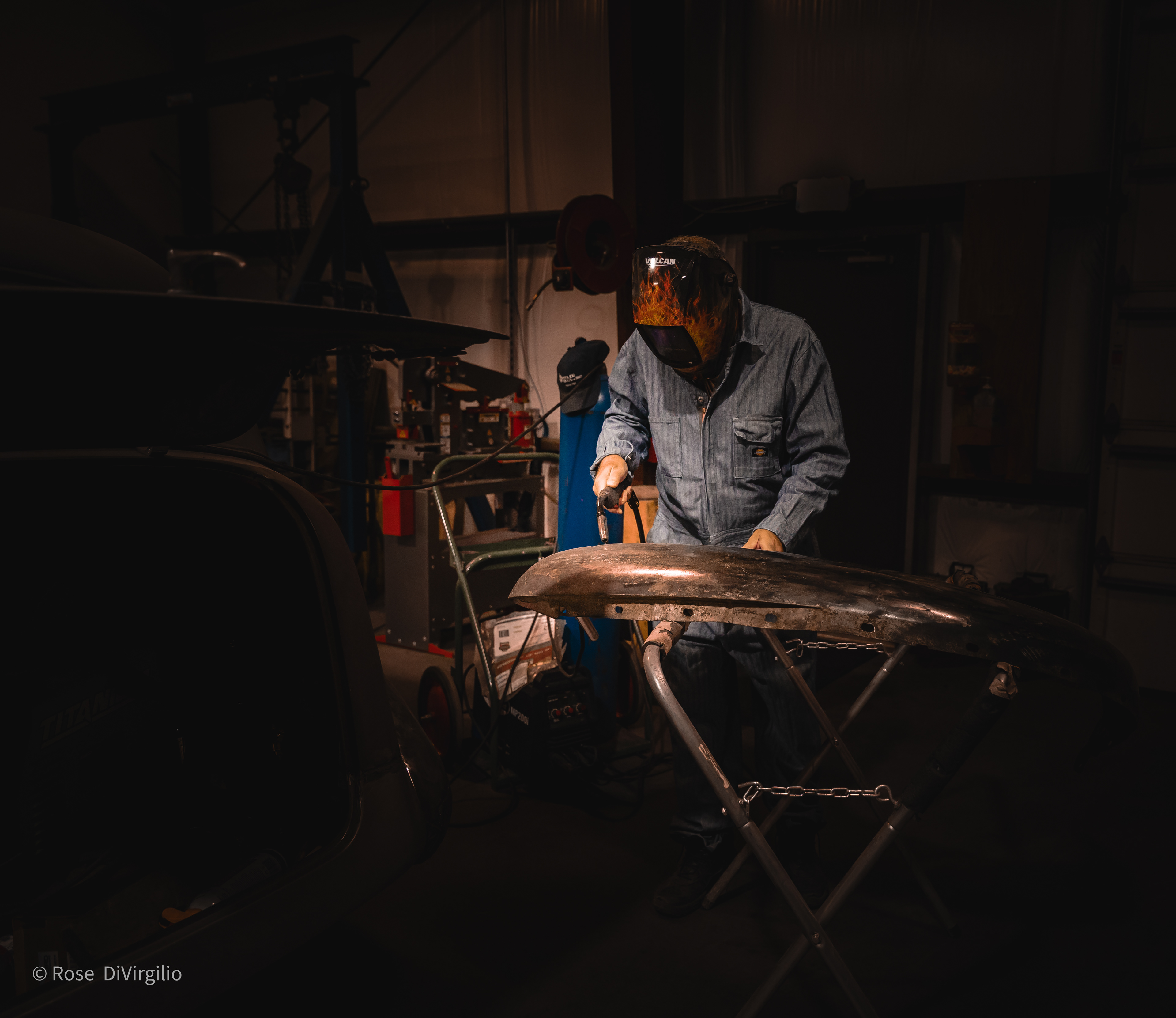
About seven hours after I started asking questions, I finally put my notes down.
We still had miles ahead of us before reaching North Carolina. My notes were a mess, and Rich had corrected me more times than I could count. But somewhere along the highway, what began as a conversation about race cars and airplanes had become a story about something much larger.
We worry about losing the trades. Listening to Rich made me realize that what we're in danger of losing isn't simply a set of skills. It's the way those skills were once passed along from one person to another, often beginning long before anybody called it a career.
Nino taught Rich. Joe taught Rich. Rich taught his children and grandchildren. And at 69, he is still learning himself.
America is beginning to understand again that we need people who know how to fix things.
Maybe this time we should remember that we also need people willing to show someone else how.
Somewhere during those seven hours, Rich said it much more simply:
"Interest often begins long before someone chooses a career."
I looked over at him.
Then I wrote it down.